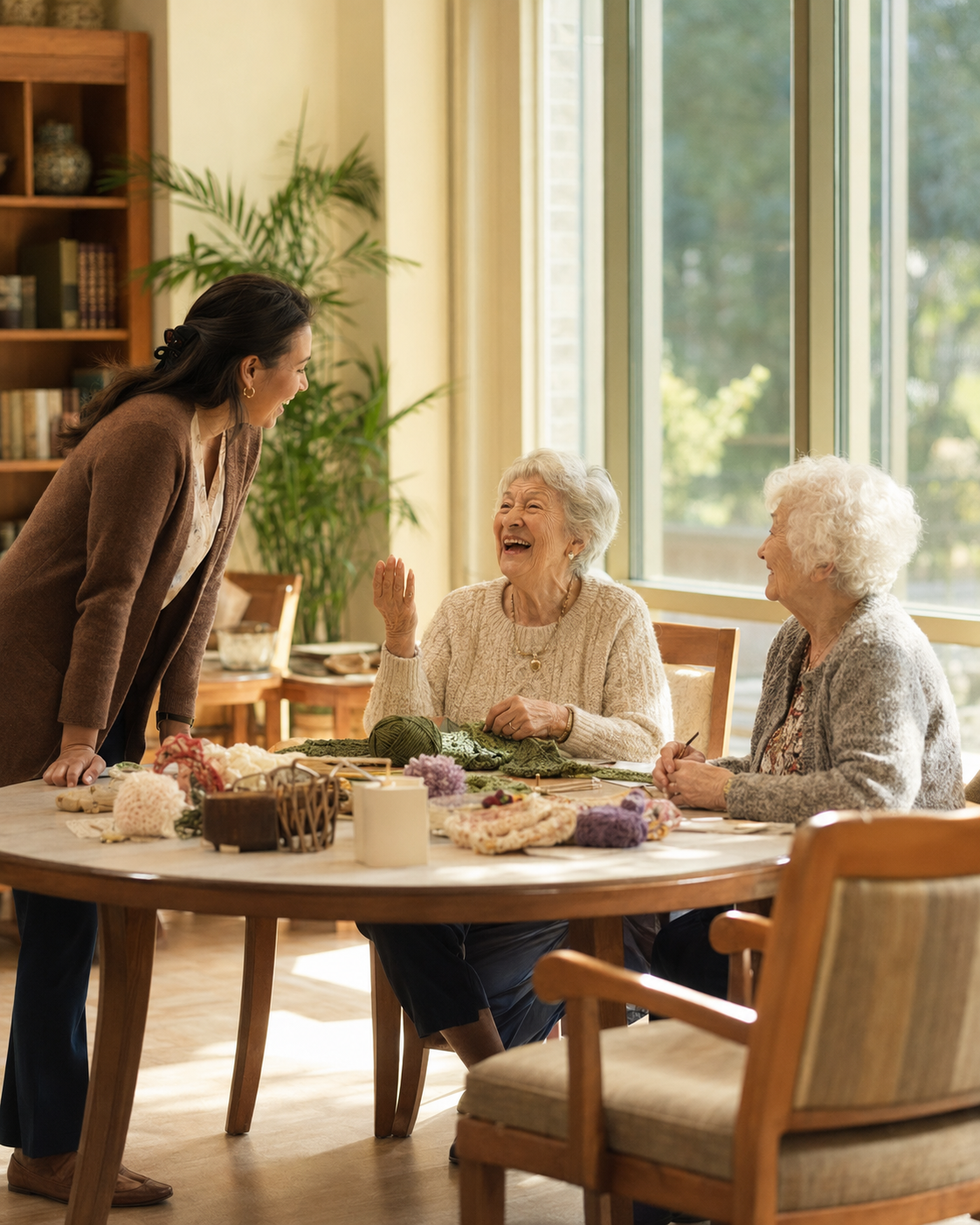
Spend ten minutes looking at senior living websites and you start to notice the same photographs. A beautiful dining room. A smiling couple walking through a garden. A tastefully furnished apartment, a chef holding a plate, three residents laughing over coffee. There is nothing wrong with any of it, but after the fourth or fifth community, they begin to blur together.
People inside the industry have started calling this the sea of sameness. At the 2026 Senior Housing News Sales and Marketing Conference, operators described pulling away from the overly polished, interchangeable look and moving toward resident stories, candid video and everyday snapshots that show what life inside a community actually feels like.
The timing matters, because the audience is about to get much larger. The Census Bureau has projected that by 2030 every baby boomer will be older than 65, putting roughly one in five Americans at retirement age. Within senior housing specifically, NIC MAP expects the population aged 80 and older to grow by more than four million people between 2025 and 2030, reaching about 18.8 million. Occupancy ended 2025 at 89.1 percent, an eighteenth consecutive quarterly increase, while construction stayed constrained.
More families researching more communities does not make differentiation less important. It makes the question they are trying to answer harder to answer. A brochure explains what a community offers. A price sheet explains what it costs. A floor plan shows where someone might live. None of them can tell an adult child three states away what it is actually like to live there on an ordinary Tuesday.
The best material is already being produced
Senior living has an advantage over most industries, which is that the product is life happening. Someone turns 100. A resident teaches a painting class. A local school visits, there is live music after dinner, the garden club gets its first tomatoes. A staff member hits fifteen years. Residents take a trip to a museum, somebody's granddaughter visits with a new baby, the Wednesday trivia game gets unexpectedly competitive, the chef tries something new, a resident tells a story that makes the whole table laugh.
None of that can be manufactured by a marketing department, because it has to happen first. And it does happen, in communities across the country, every single day.
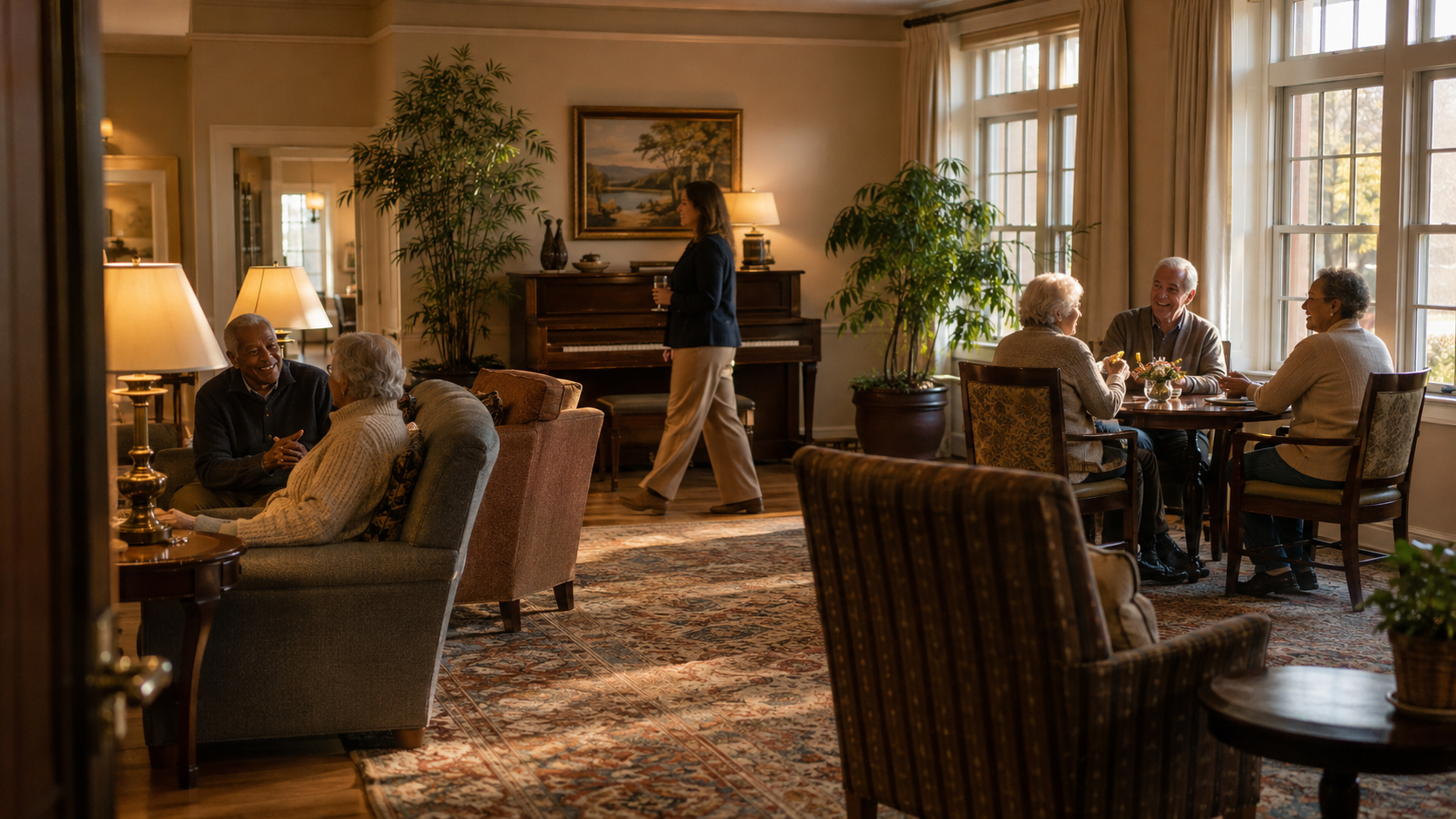
Operators have noticed. In 2025, Senior Housing News reported that communities were increasingly using Facebook, Instagram, YouTube, Reels and TikTok to show prospective residents and their families what community life looks like from the inside. One executive described the whole discipline as simply taking out a phone and capturing moments as they happen. Another made the point that digital media should not be treated as something separate from the life of the community.
There is a real difference between creating content about a community and showing what happened in that community today, and PostShop was built around the second one. Nobody has to stop what they are doing and become a social media manager. Someone takes the photo or the short video they were probably going to take anyway, and PostShop handles most of what comes next: the writing, adapting it for whichever platforms the community uses, formatting the media, and bringing the finished post back for approval before anything is published.
The audience is more online than the stereotype suggests
There is still a habit of thinking about senior living social media as something aimed at adult children. They certainly matter. AARP reported in 2026 that more than 51 million Americans were providing care to someone aged 50 or older.
But older adults are online in numbers that surprise people who have not looked recently. AARP's 2026 technology research found that 90 percent of adults 50 and older owned smartphones by 2025, and that 91 percent had used social media in the previous three months. Facebook remains dominant in that group at 72 percent, with YouTube at 53 percent, Instagram at 34 percent and TikTok at 18 percent.
So a community's feed is doing several jobs at once. It speaks to adult children who are researching. It reassures families who already chose. It shows prospective residents what their days might look like, reminds the surrounding neighborhood that the community exists, and lets prospective employees see something of the culture before they apply. Current residents and their families often just enjoy seeing it.
The hard part was never finding enough to say. The hard part is getting real life from inside the building out to all of those people without adding "content manager" to somebody's job description.
What senior living does not need is another dashboard
Technology has a habit of solving one workload by creating another. A social platform needs someone to operate it, so a scheduler appears to make several platforms easier, and now someone has to operate the scheduler. There are calendars to fill, posts to write, photographs to resize, accounts to monitor, publishing errors to catch, comments to check and analytics to read.
For anyone running marketing across multiple communities, there is a second problem underneath that one. The people who know what happened today are not usually sitting in the corporate marketing office. They are in the buildings. The activity director knows about the afternoon concert, the dining team knows what came out of the kitchen, the executive director knows about the employee anniversary, and somebody on the floor knows that three residents unexpectedly started dancing. Those people should be able to contribute without learning a marketing system first.
That is roughly the design brief PostShop started from. When a text message is enough, the interaction happens by text. When a screen genuinely helps, a private screen gets sent for that one task and then it is done. A community names which phone numbers are allowed to submit, so contributions come from staff rather than from anyone who finds the number. On the Growth plan that is up to three people, and on Authority there is no limit, which suits a building where the activity director, the dining lead and the executive director all see different moments. Published content goes to whichever of the nine connected destinations can carry it: Instagram, Facebook, LinkedIn, TikTok, YouTube, Pinterest, Threads, X and Google Business Profile.
The division of labor is the point. People inside the community supply the one thing technology cannot, which is the moment itself. Technology does the repetitive work around it.
AI should support reality rather than replace it
This is becoming a more interesting question as generative models get better, because producing a beautiful image of almost anything is now trivial. A beautiful senior living dining room can be generated. So can a beautiful garden, a group of smiling older adults, and several paragraphs describing their supposedly wonderful afternoon. It is technically impressive and completely useless as evidence of what life is like in any particular community.
If anything, the easier synthetic content becomes to produce, the more valuable the authentic kind gets. Operators seem to be reaching the same conclusion. Senior Housing News reported in March 2026 on operators embracing authenticity to cut through the noise, describing communities using real residents and employees throughout their websites and video, alongside everyday social photography, on the argument that prospects want a genuine window into community life rather than a rendering of it. In memory care, leaders have made a similar argument about authenticity and transparency, saying families increasingly want evidence that their parent will be known as an individual rather than reassured by generic marketing language.
PostShop's image workflow starts from something real for exactly this reason. The community supplies the photograph or the video. Everything after that is help around a real starting point: writing the words, adapting the presentation, turning a still into short-form video, generating subtitles from speech, preparing captions in more than one language. A real person took a real photograph of something that actually occurred, and the system works outward from there rather than inventing the occasion.
When anyone can manufacture polish,
reality starts to look like a competitive advantage.
That principle is going to matter more as the line between documenting and inventing keeps getting easier to blur.
Knowing when not to automate
There is a second consideration here that is specific to senior living, which is that the people in the photographs are not props. They are residents, employees, relatives and visitors, and their dignity is not a marketing variable. Consent matters, privacy matters, and each community's own policy about public photography matters. The industry has published guidance on exactly this. AHCA/NCAL tells nursing and assisted living centers to maintain a social media policy, train staff on privacy, and make residents and families aware of their surroundings when photos and video are being taken, down to checking who is visible in the background and whether anything confidential is in frame.
Technology should make responsible communication easier without encouraging anyone to stop thinking, which is why approval is not optional in PostShop and cannot be switched off. Every proposed post comes back before publication. Somebody reads it, changes it, or rejects it. Nothing gets published because an algorithm produced it.
The same applies after a post goes live. PostShop watches for comments on connected Instagram and Facebook posts, brings a new comment to the community by text, and includes a suggested response. That response can be sent as written, edited first, or ignored entirely, and if it is approved PostShop posts it back to the platform without anyone needing to open the app. The system does the monitoring and the drafting; a person keeps the judgment.
This lines up with how standards bodies have been framing the question. The National Institute of Standards and Technology names accountability, transparency, reliability, privacy, safety and fairness among the characteristics of trustworthy AI, and specifically calls out human-AI interaction and understanding how outputs are produced. For us, that is a design constraint rather than a policy page. We would rather ask for approval than assume it.
Trust accumulates
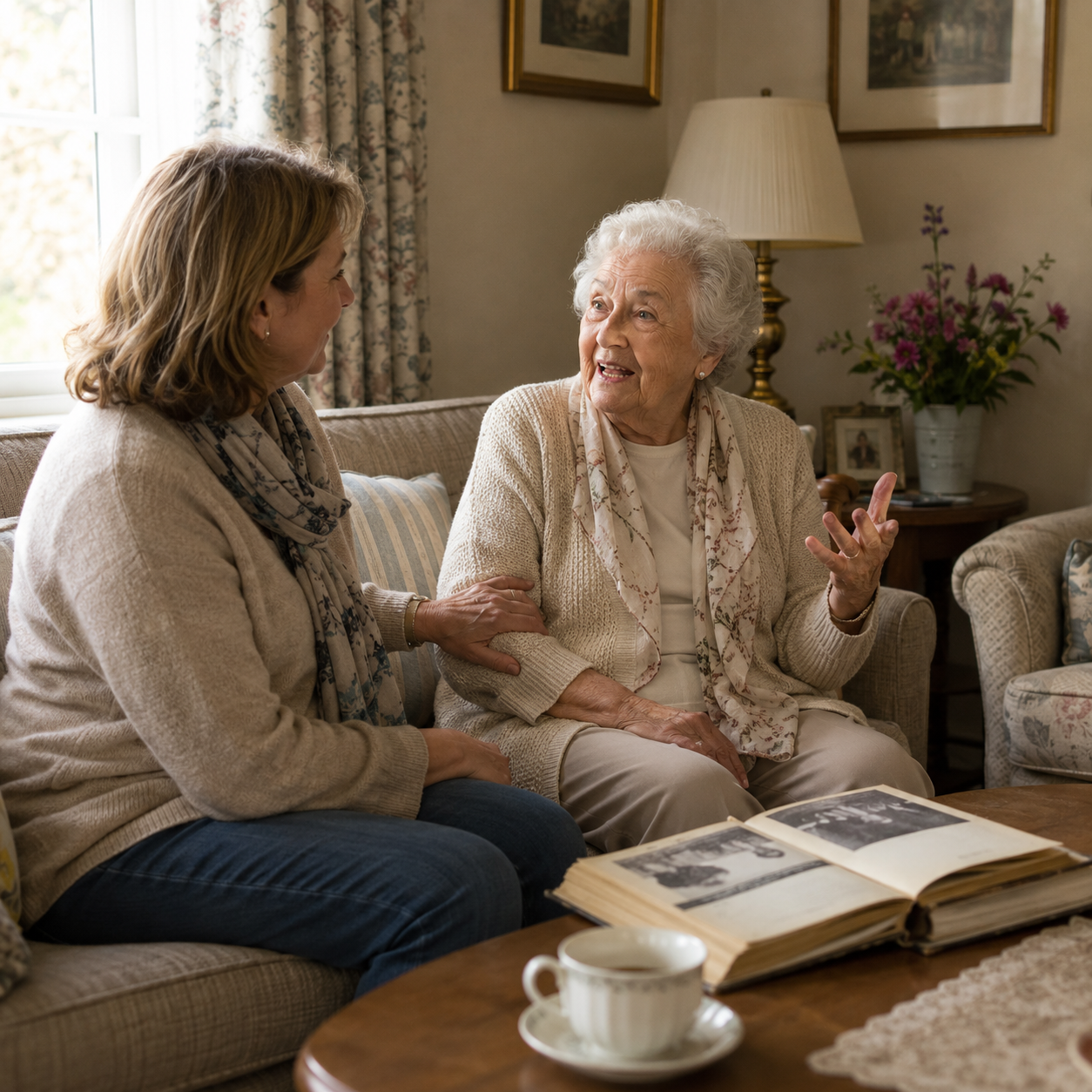
A family's impression of a community almost never comes from one advertisement. They find it through Google, read the reviews, look at the website, scroll the Facebook page, send a link to a sibling, watch a video, and come back a week later to do it again.
The broader consumer research gives some sense of the environment, if not the specifics. BrightLocal's 2026 survey found that 97 percent of consumers use reviews when deciding about a local business, that 66 percent kept researching after reading a positive review rather than deciding immediately, and that 24 percent went on to look at the business's social channels. Choosing a senior living community is obviously a heavier decision than choosing a restaurant, so that data should not be read as a direct measure of anything. What it does illustrate is that people now move across several sources looking for consistency.
A feed full of current community life becomes one of those sources. Not because any individual post generates a lead, since most of them will not, but because taken together they form a record. This is who lives here. This is what people do on a weekday. This is who works here and how long they have stayed. This is what the place looked like last Tuesday rather than on photography day eighteen months ago. A brochure cannot say that.
Local truth at any size
This gets more pointed for organizations responsible for more than one community, because scale creates efficiency and also creates sameness. A company can and should have common values, standards, branding and strategy across every location. But the life inside each building stays local. Different residents, different staff, different neighborhood, different story today.
There is no good reason a scalable system should require those differences to flatten out. If anything, senior living needs the opposite arrangement: shared standards with local truth. In PostShop today, each community runs as its own account with its own authorized contributors, its own voice and its own approvals, which keeps the source material coming from the people who are actually there.
That is where this kind of technology becomes useful in a way worth caring about. The employee who happens to witness a wonderful moment should not need a marketing title to help share it. A smaller community should not need a social team to present itself well. A larger operator should not have to trade consistency across the organization against authenticity inside any one building.
The real thing
Senior housing is heading into a stretch of significant demographic change. NIC MAP describes the demand growth as durable and long-lasting, driven largely by aging boomers, while the industry continues to work through a shortage of new supply.
More demand does not make the public story less important. It makes it more important, because the next generation of residents and families will arrive with different expectations about technology, transparency and access to information, and they will compare communities in ways their parents could not. At the same time, AI is going to make polished marketing effortless for everyone.
So take the picture. Capture the video. Show the dinner that was actually served and the painting that was actually painted, the staff member people already know by name, the residents enjoying the place where they actually live. Then let the technology handle what technology is good at, which is writing, formatting, adapting, organizing, distributing and monitoring, and keep people responsible for what people are good at: judgment, consent, context, and deciding what deserves to be shared at all.
That seems like a reasonable arrangement for senior living. It may be a reasonable arrangement for AI more generally. The future of marketing does not have to be a contest over who can produce the most convincing version of reality, and senior living communities are already holding something better than that.
If you run a community and this sounds like the arrangement you want, PostShop runs on your real accounts free for five days.
Start 5 Days FreeSources
- U.S. Census Bureau, Demographic Turning Points for the United States: Population Projections for 2020 to 2060 — census.gov
- NIC MAP, Senior Housing Industry's Next Challenge: A Demand Surge Without the Supply to Match — nicmap.com
- NIC, Occupancy Rate for Senior Living Communities Increased in 2025 as Construction Stalled — nic.org
- NIC MAP, Senior Housing Market Outlook Report — nicmap.com
- Senior Housing News, Senior Living Operators Navigate 'Sea of Sameness' With Better Storytelling — seniorhousingnews.com
- Senior Housing News, Show, Don't Tell: Operators Embracing Authenticity to Break Through the Noise — seniorhousingnews.com
- Senior Housing News, 'You Have to Be Quick': How Senior Living Operators Use Social Media to Build Buzz — seniorhousingnews.com
- Senior Housing News, 'Authenticity and Transparency': Memory Care Operators Pivot to Meeting Wants of Gen X Adult Children — seniorhousingnews.com
- AARP, Family Caregiving for Adults Age 50+ in the United States — aarp.org
- AARP, Research Insights on Technology — aarp.org
- BrightLocal, Local Consumer Review Survey 2026 — brightlocal.com
- AHCA/NCAL, Social Media Guidance: Promoting Positive Engagement — ahcancal.org
- National Institute of Standards and Technology, AI Risk Management Framework (AI RMF 1.0) — nist.gov
- PostShop, What's Included — postshop.live/features