Essay I · For writers
You don’t need better posts. You need to show up.
Chasing the perfect post is the most reliable way to end up posting nothing at all — and in 2026 the perfect post is not even what works.
It usually starts on a Sunday. A writer decides this is the year she finally does this properly. She blocks off the afternoon, arranges the desk, moves the lamp, photographs the manuscript at three angles, downloads an editing app she will open twice, and rewrites the caption until it sounds like a person she has never met. She posts it. It looks lovely. And then not much happens.
A few likes. Underwhelming, for the afternoon. So the next week, buried in the actual book, she does not post. Then she misses another. The bar she set — every post a small production — turns out to be impossible to clear while also writing. A month later the account is quiet, and a reader who finished the last novel and went looking for her arrives at a page that has not moved since spring.
That is the trap, and almost everyone serious about the work falls into some version of it.
The polish is the problem
Here is the cruel mechanics of it: the more finished you decide each post has to be, the more effort it takes — and the more effort it takes, the less often you post. This is not a character flaw. It is arithmetic, and it beats discipline every time.
The worse news for anyone who has been carefully polishing is that the polished version is not even the one that works any more. For years the platforms trained everybody to chase a glossy, magazine-perfect grid. That era is over, and they are saying so out loud. At the end of 2025 the head of Instagram announced the app would spend the coming year favouring raw, real, human content over the slick and the machine-made.1 The reasoning is unsentimental: now that anything can be manufactured flawlessly and instantly, polish is cheap and abundant, and the scarce thing is whatever reads as genuinely human.
The thing most writers avoid because they have no time to make it perfect is the thing that works because it isn’t.
Real and regular reads as a person still at work. Polished and rare reads like an advertisement, or worse, like nobody has been here in months.
What a quiet account actually says
There is a second thing happening, and for a writer it matters more than reach.
People do not only scroll these platforms now; they search inside them. A reader who finishes your book and wants to know whether there is another one does not write to your publisher. She types your name into whichever app she is already holding. What she finds there is the answer to a question she is asking without meaning to: is this person still writing?
An account that stopped in March answers it badly. It does not matter how good the work is or how much of it is happening behind the silence. A dormant page plants a quiet doubt, and doubt is enough to end the search.
The reframe
So here is the part most writers have backwards. You do not need better posts. You need to show up.
A photograph of the page you marked up this morning. The book you pulled off the shelf and why, today, of all days. The window at five, which is not a photograph of light but evidence that the work is happening when nobody is watching. Unstaged, imperfect, and regular.
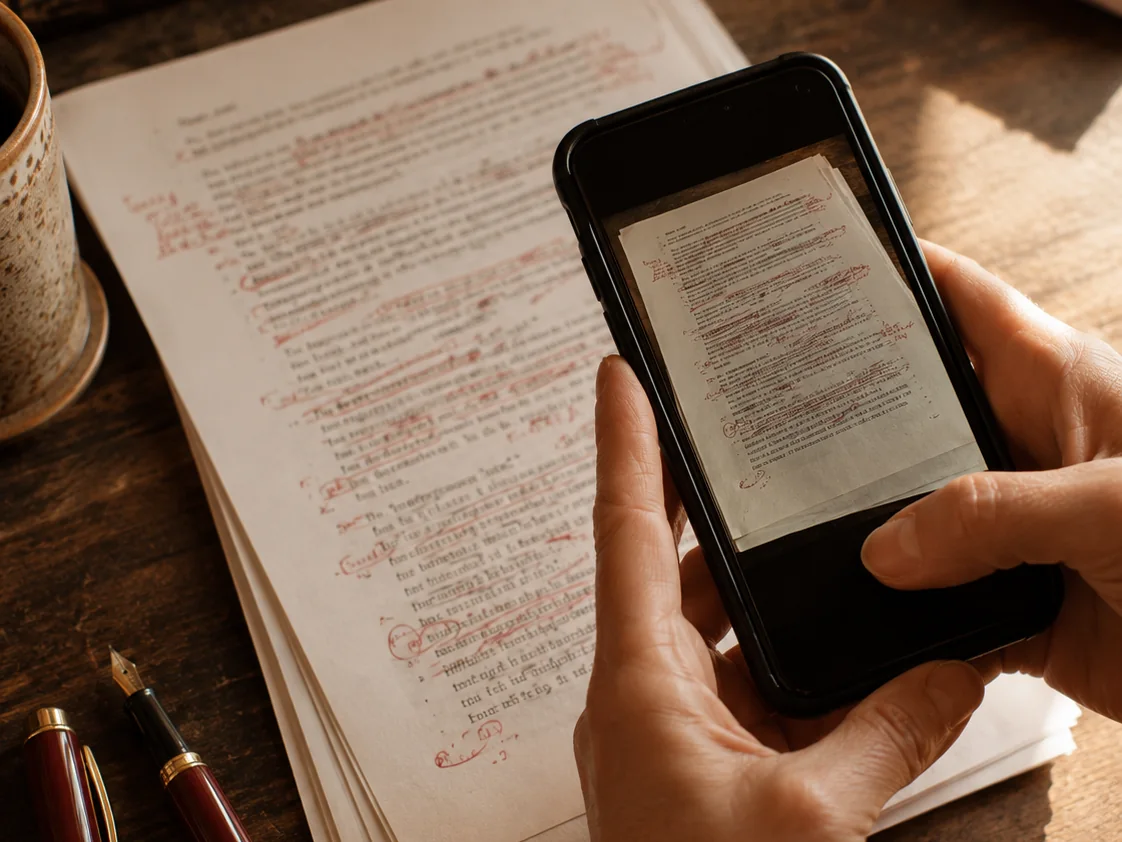
That is not a watered-down version of being present online. By the platforms’ own account, it is the version that is winning.
This does not mean effort is dead. A true line still beats a lazy one and a clear photograph still beats a blurry one. But real and specific, posted often beats polished and perfect, posted never so completely that it is not a contest.
What to do tomorrow morning
You do not need a strategy. You need a habit with a bar low enough to keep.
Take the photograph you were going to look at anyway — the page, the shelf, the proof, the walk. Do not stage it. Do not agonise over the sentence; one true line is the whole requirement, and you write those for a living. Then go back to the book, which is the only thing any of this was ever in service of.
Do that more days than not and within a few weeks you will look more alive than almost every other writer in your corner of the internet — most of whom are still waiting for a free Sunday to make a perfect post they will never get to.
Real beats perfect. Regular beats rare. Showing up is the whole game.
Everything above is the part that is yours: the noticing and the line. The part that is not yours — nine platforms, nine apps, the sizing, the ordering, the daily discipline of doing it everywhere while trying to write a book — is what we take. You text one word, a private page opens, you add the photograph and your line, and it publishes wherever you are. Nothing goes out until you have read it.
Pilot program: $50 a month for your first year, then $99. Five days free, cancel anytime. Open to ten writers. Join the pilot · Everything included.
References
- Om Malik — on Adam Mosseri’s year-end memo as head of Instagram, posted 31 December 2025, with its full text: raw, real and human content favoured through 2026 over the polished and the machine-generated.
Figures are cited as published by their sources. Where a source has updated its numbers since, the source is authoritative and this page is not.