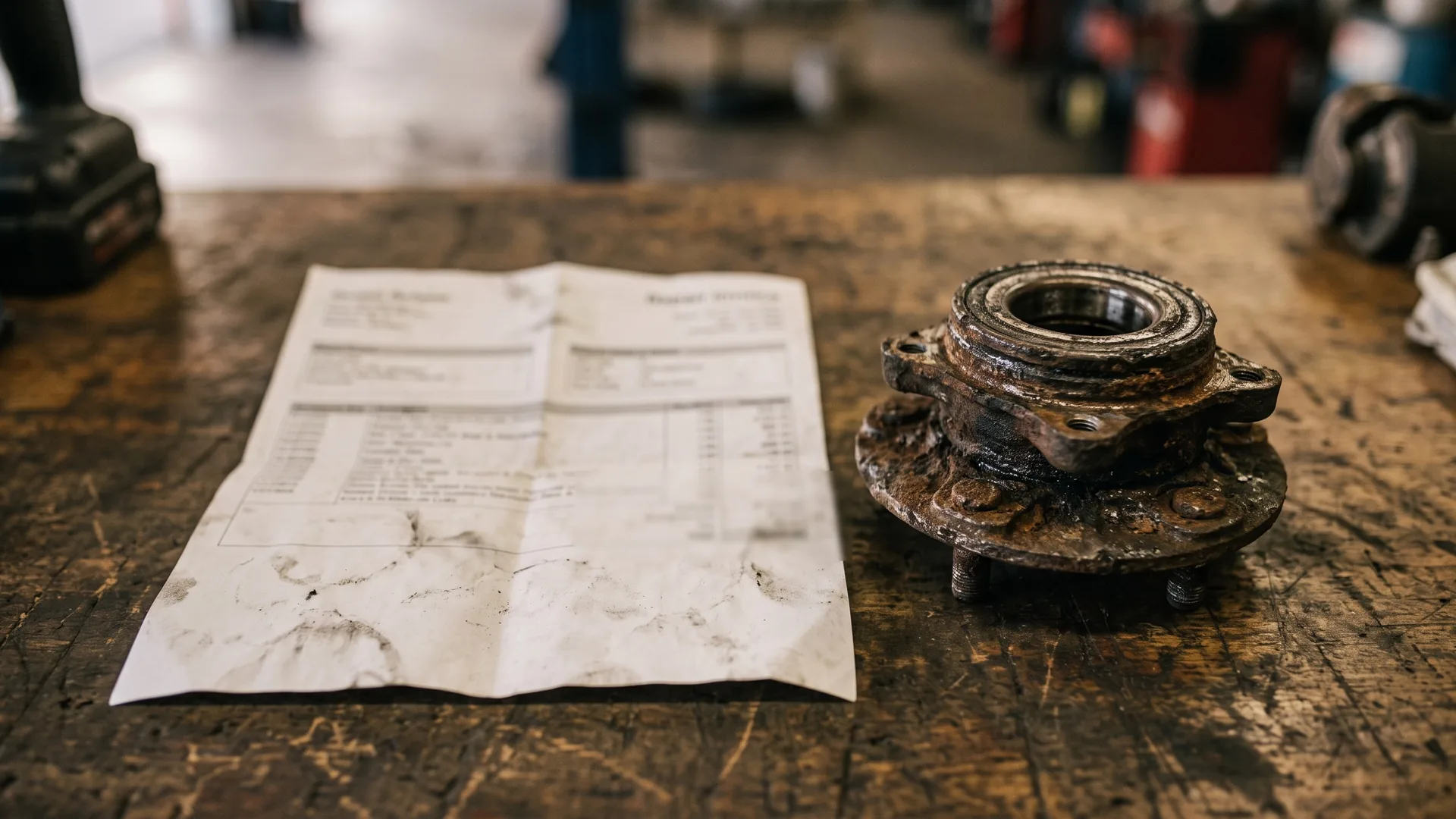
A customer drops off a car with a noise.
You listen to it. Drive it. Put it on the lift. Check the obvious thing. It isn’t the obvious thing. You test something else. Pull a wheel. Find the problem. Call the customer. Get approval. Fix it. Road-test it. Send it home.
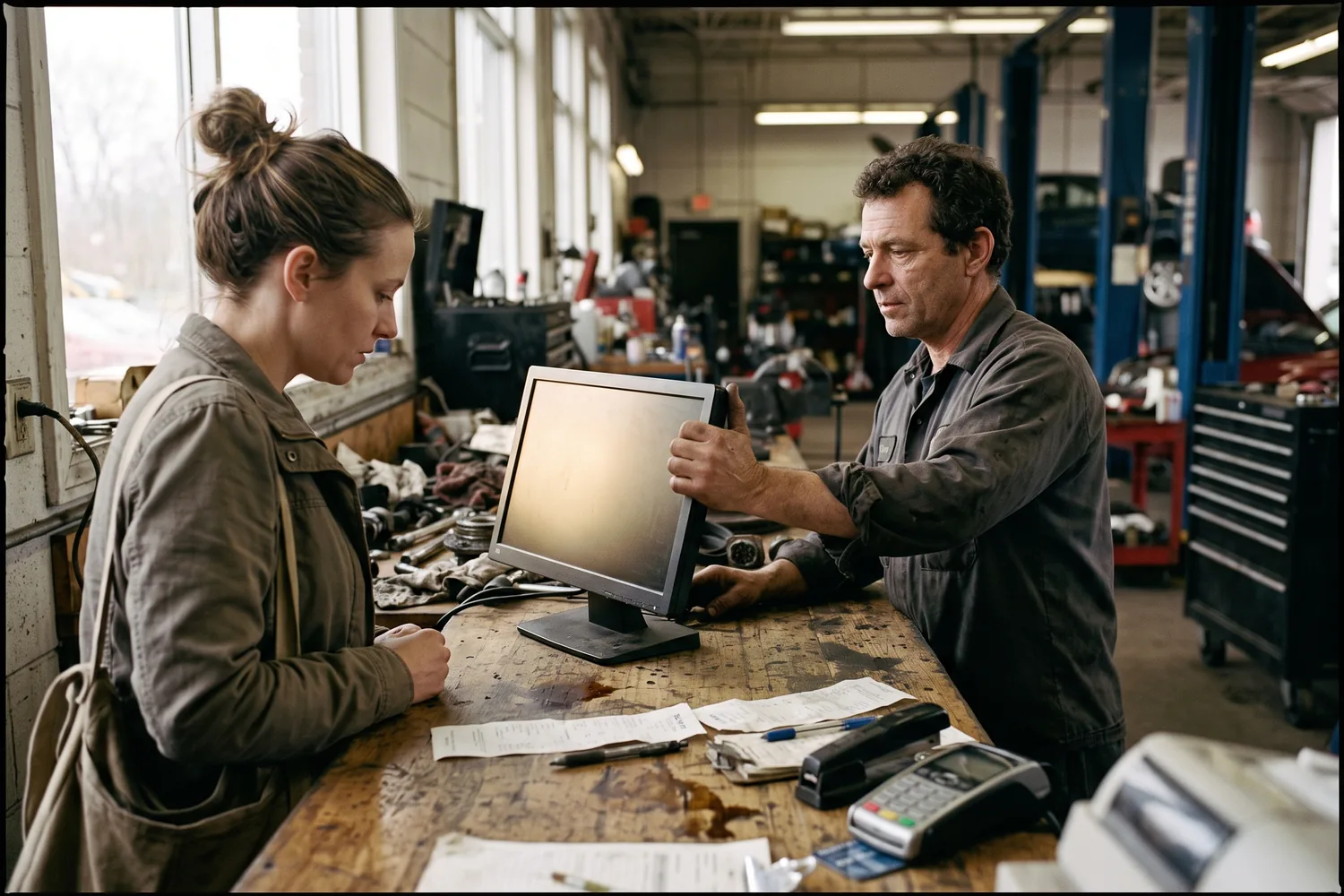
The customer sees the final invoice.
$1,600.
And somewhere in the back of his mind is a very reasonable question: what exactly did I just pay $1,600 for?
That question has caused more grief between good repair shops and good customers than almost anything else in the business. Because you know what went into the repair. The customer usually doesn’t.
- He sees the part you replaced.
- He doesn’t see the three things you ruled out before replacing it.
- He doesn’t see the $8,000 piece of equipment you used to diagnose it.
- He doesn’t see the fifteen years it took your technician to know the obvious answer didn’t sound quite right.
- He definitely doesn’t see the expensive wrong repair you didn’t sell him.
So what does he have left? The invoice.
That’s not a great place to start a relationship.
The expensive part isn’t always the part.
This is one of the strange things about auto repair. Sometimes the physical repair is easy. Knowing what to repair is the valuable part.
A technician can spend forty minutes proving that a $900 component is perfectly fine and that the actual problem is a $60 sensor buried somewhere God clearly did not intend a human hand to reach.
To the shop, that diagnosis is the victory. To the customer, the invoice still says “sensor.”

That gap matters. Because when customers can’t see expertise, they judge what they can see: price, speed, reviews, the waiting room, whether the advisor seemed honest, whether another shop quoted less.
The shop that makes its expertise visible gives the customer something better to judge.
Show the repair before you have to defend the price.
This does not mean filming a documentary every time you change a water pump. Nobody has time for that, and nobody wants to watch it.
It means recognizing the moments that explain why your shop is worth what it charges.
- A scored cylinder wall.
- A bearing with play you can see.
- The “new” brake job somebody installed six months ago that is wearing completely wrong.
- The connector that looked fine until your technician load-tested the circuit.
- The oil filter that appears to have survived several presidential administrations.
- The problem two other shops missed.
Take the photo.
That one photograph can do more for the perceived value of your shop than another year of saying QUALITY SERVICE YOU CAN TRUST, because now the customer can see the thing.
Better yet, show the whole story.
Some repairs need more than one photograph. That’s where a carousel is useful — not because carousels are a clever social-media tactic, but because sometimes the story has three parts.
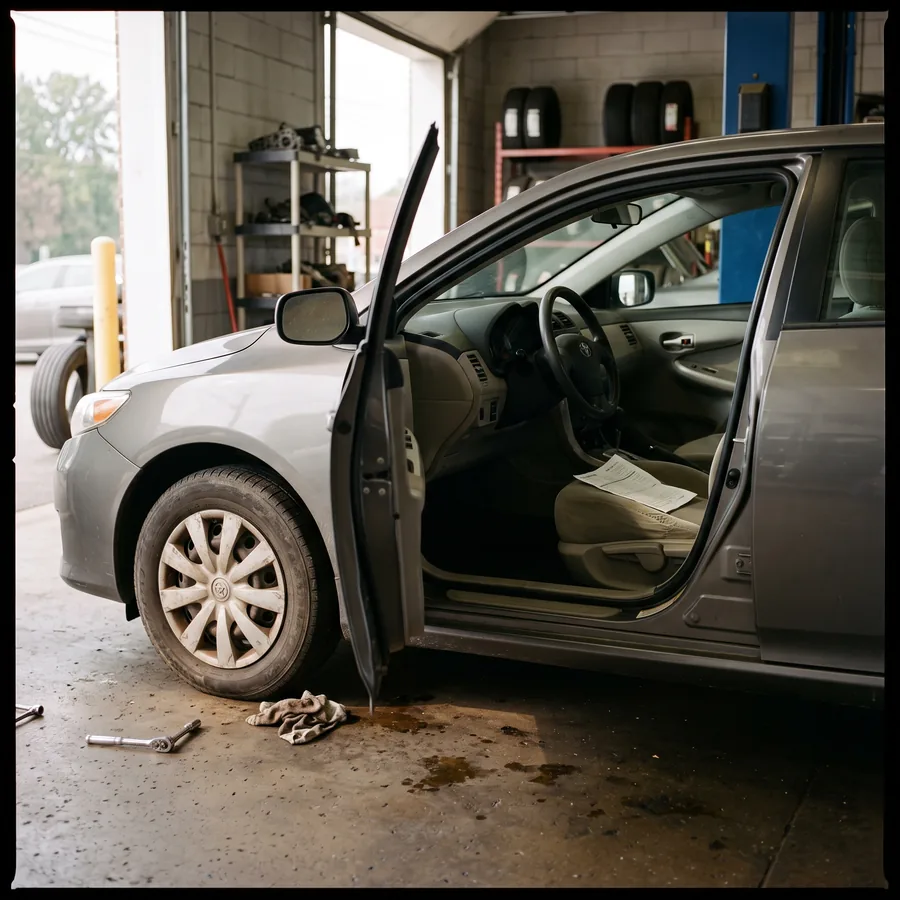
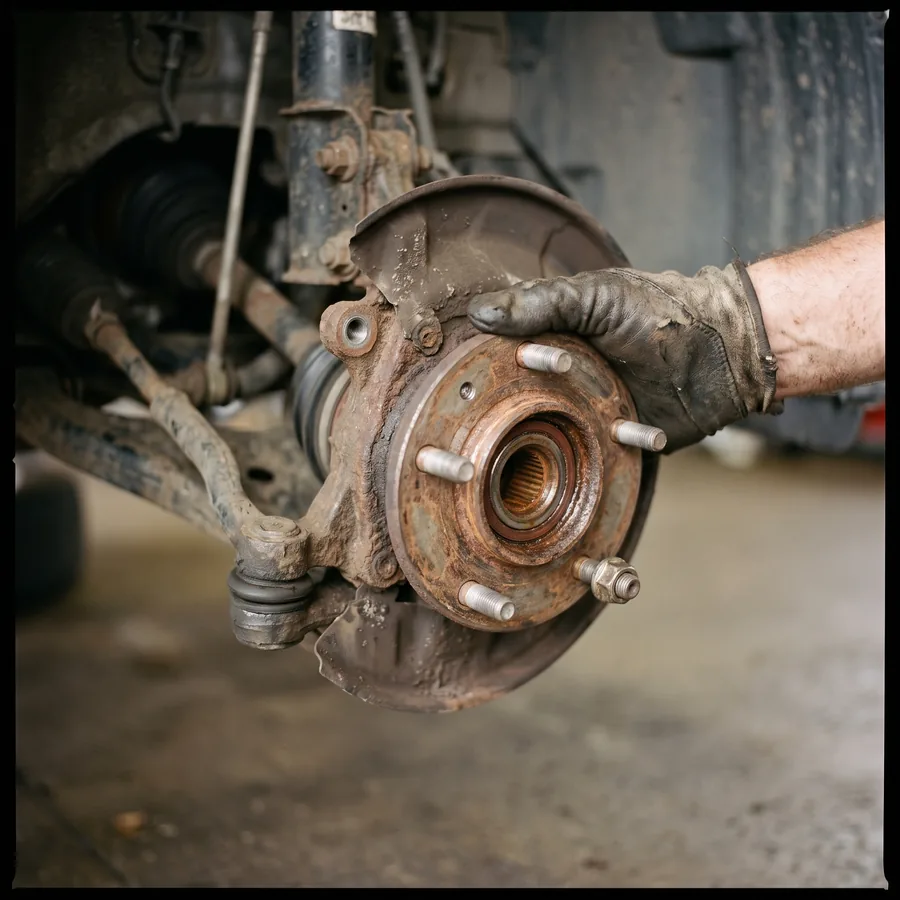

Maybe there’s a fourth showing the technician or the finished job. That gives somebody scrolling your shop’s account a miniature version of the experience your actual customer had. Complaint, diagnosis, judgment, repair, result.
PostShop can take multiple photos from the same submission and publish them as carousels where the platform supports them, while adapting the same material for the other accounts you connect.
The point isn’t to squeeze more “content” out of one repair.
The point is to let somebody watch your shop think.
That is much harder to fake.
“But we don’t get interesting cars every day.”
You probably do. You’re just too used to them.
This is one of the biggest problems good mechanics have with social media. The thing a customer has never seen in his life is the thing you have already seen four times this month.
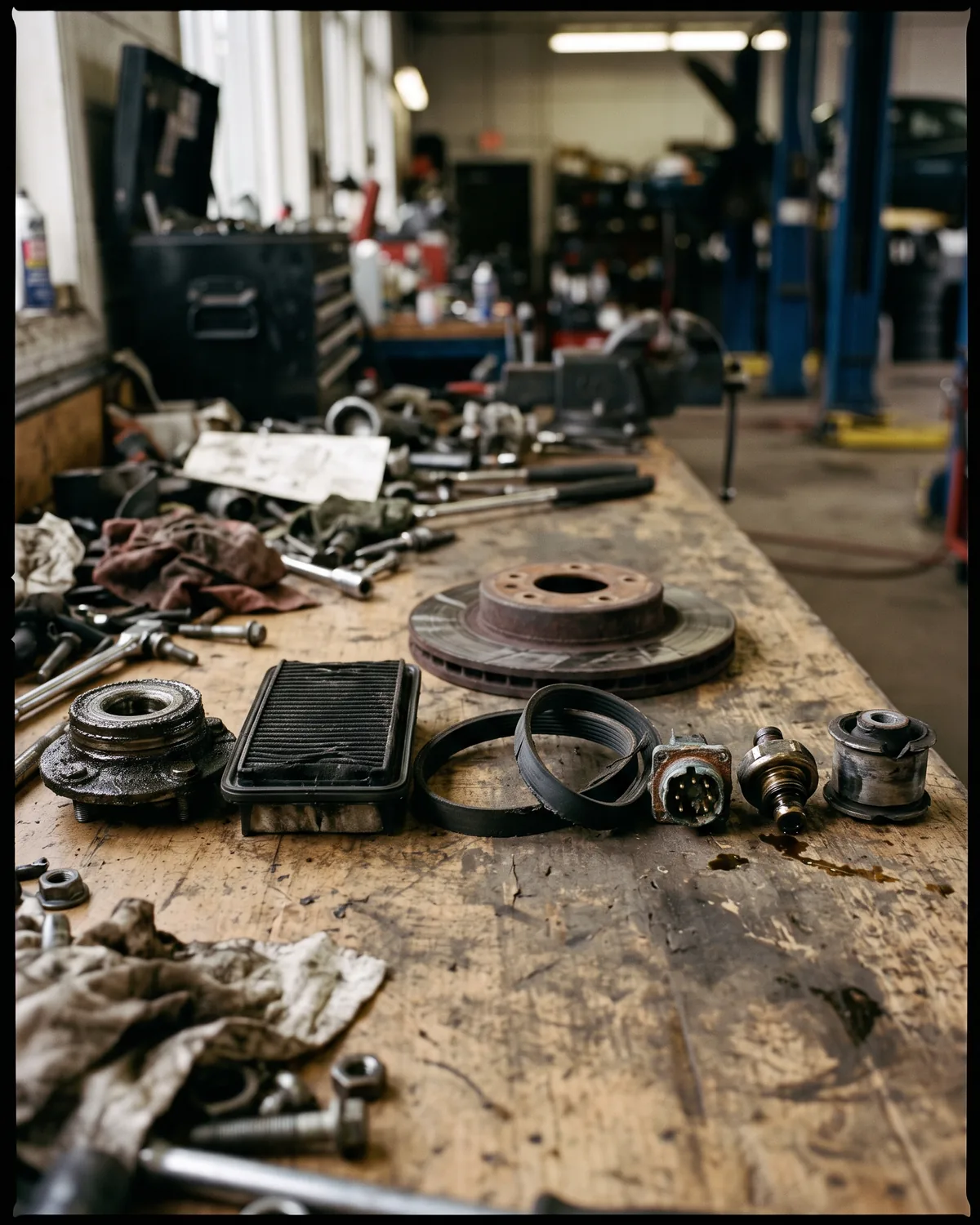
A badly worn control-arm bushing? Routine. An injector pattern that immediately tells your lead tech what’s wrong? Routine. An alignment printout that explains why a customer keeps chewing through tires? Routine.
To you. Not to the person paying you to know what it means.
That’s why PostShop’s IDEA feature doesn’t simply tell a repair shop to “post behind the scenes.” Text IDEA, and it returns three specific things worth capturing based on what the account has already been showing, what has worked, and what reviews and comments keep bringing up. If those three aren’t useful, ask for another set.
There is an important difference between these two instructions.
What most tools tell you
Post something educational today
What IDEA tells you
Your posts showing failed parts are getting more response than general shop photos, and your reviews keep mentioning diagnosis.
Get a photo of the next unusual failure with the technician who found it.
One is homework. The other is paying attention.
And what happens when you forget for four days?
Nothing terrible. The Internet survives.
This is another place where most social-media tools get a little silly. They give you a calendar. Then they wait for you to feed the calendar. If you don’t, the calendar remains admirably committed to doing absolutely nothing.
PostShop handles quiet weeks differently. If the shop goes quiet, it can text you three post ideas built from photos you already sent. You don’t have to walk into the bays hunting for something new because software decided Wednesday requires content. Pick one of the moments you already captured and the post gets made.
That matters in a repair shop, because Tuesday may produce six things worth showing and Friday may produce none.
Real businesses do not operate on content calendars. Things happen when they happen.
Reviews are evidence too.
There is another piece of the $1,600 problem. What if the customer leaves thinking that was expensive, but these guys were worth it?
You want the next person to see that. Not because five-star reviews are some magical SEO ritual, but because customers are often better at explaining your value than you are.
- “They found what two other shops missed.”
- “They showed me exactly what was wrong.”
- “They told me what could wait instead of selling me everything.”
- “The repair was expensive, but I understood why.”
Those statements answer the question a prospective customer is already asking.
PostShop lets the shop text REVIEW after a job, and it sends the review request to the customer you just finished with. That is a better time to ask than six weeks later, when nobody remembers whether the alternator was replaced or the transmission fell out.
Then listen to what customers keep saying.
This may be the most useful part.
If ten reviews praise your shop for being fast, that’s telling you something. If customers repeatedly say your advisors explain repairs clearly, that’s telling you something. If every photo of one particular technician gets comments, that’s telling you something. If people keep asking about a type of repair, that is also telling you something.
PostShop reads the patterns across posts, comments and Google reviews and turns them into specific recommendations about what to show next. The monthly reporting is designed to end with actions, not a graph showing that one number went up and another went down.
Maybe your customers don’t care nearly as much about your beautiful waiting room as you thought. Maybe they care that you explain things.
Good to know. Show that.
None of this requires you to become a content creator. See something worth showing, send it, approve the draft, and go back to work. PostShop handles the writing, the platform versions, the publishing and everything that comes after.
Start 5 days free$199/month, everything included · 5 days free before you’re charged · Cancel anytime
Comments can tell you what the invoice didn’t.
A post about a repair may bring questions.
- How did you know it was the bearing?
- How long can you drive it like that?
- Does this happen on the 3.5 too?
Those are not annoyances. Those are people handing you the next thing they want to understand.
PostShop monitors Instagram and Facebook comments, drafts replies in the shop’s voice, and brings them back for approval before anything is posted. It does not unleash a robot to argue about wheel bearings under your company name at two in the morning.
You remain the shop. PostShop handles the repetition around it.
So how do you make a $1,600 repair look like $1,600 worth of work?
You don’t. That’s the wrong goal.
You show enough of the work that people understand what they are paying for. The judgment. The diagnosis. The experience. The equipment. The mistakes avoided. The problem solved. The technician who knew where to look.
Do that consistently and the invoice stops being the only evidence the customer has. That matters the next time somebody sees your price and compares it to the shop down the street.
You may still be more expensive. Fine.
The respected shop doesn’t have to be the cheapest shop. It has to make the difference visible.
The part has a price. Knowing what to do with it has value. PostShop helps people see the difference.