Every auto repair shop says roughly the same things.
- Honest service.
- Experienced technicians.
- Quality work.
- We treat you like family.
- We fix it right the first time.
None of those claims are necessarily false. They’re just claims. And the problem with claims is that every shop gets to make them.
A bad shop can call itself honest. An inexperienced technician can be photographed under a lift. AI can write twenty posts about brake maintenance before lunch, and a graphic designer can make almost any business look polished.
Looking like a good shop has never been easier. Actually being one is still hard.
That difference is worth showing.
Don’t perform expertise. Show it.
Suppose two shops post on Facebook today.
Shop one posts
5 Signs Your Brakes Need Attention
Shop two posts
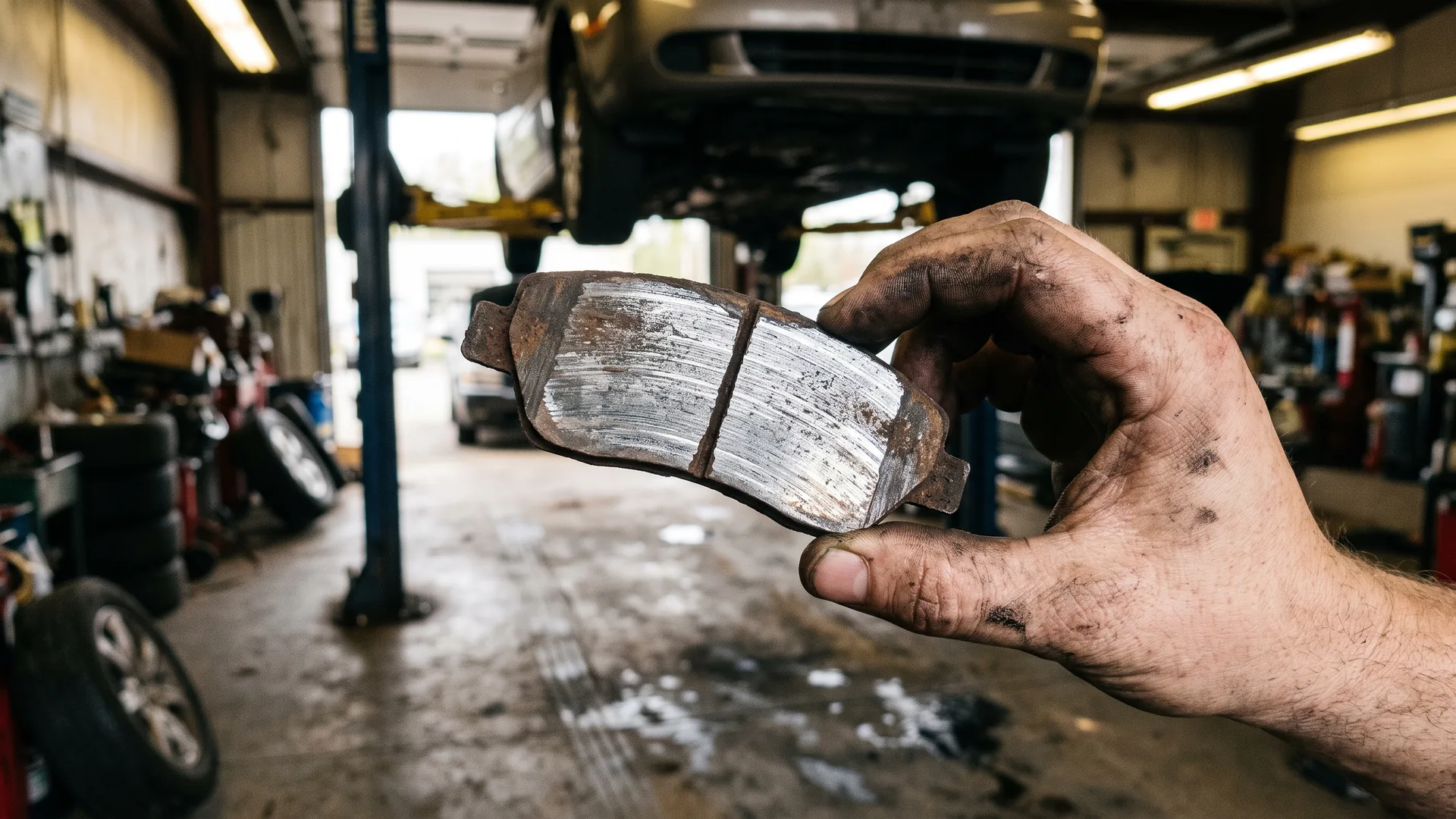
A photo of a brake pad worn almost completely through.
The technician explains that the customer came in because of a grinding noise, what they found when they pulled the wheel, and what could have happened if the driver had kept going.
The first graphic looks good. The advice is correct. The logo is in the corner. There is nothing wrong with it.
But which shop do you know more about? More importantly, which shop do you respect?
The first shop created content. The second showed evidence.
That distinction is becoming more important because content itself is becoming nearly free. Anyone can publish. Anyone can sound knowledgeable. Anyone can stay active. The scarce thing is proof that there are real people behind the business who actually know what they’re doing.
Respect has to come from somewhere.
Repair shops have always had a trust problem, and it isn’t the shops’ fault.
Customers often can’t see the problem with their own car. They may not understand the diagnosis. They may have no idea whether a $900 repair is reasonable or completely unnecessary. That’s why shops spend so much time telling people they’re trustworthy.
There’s a better way. Show the customer what you see.
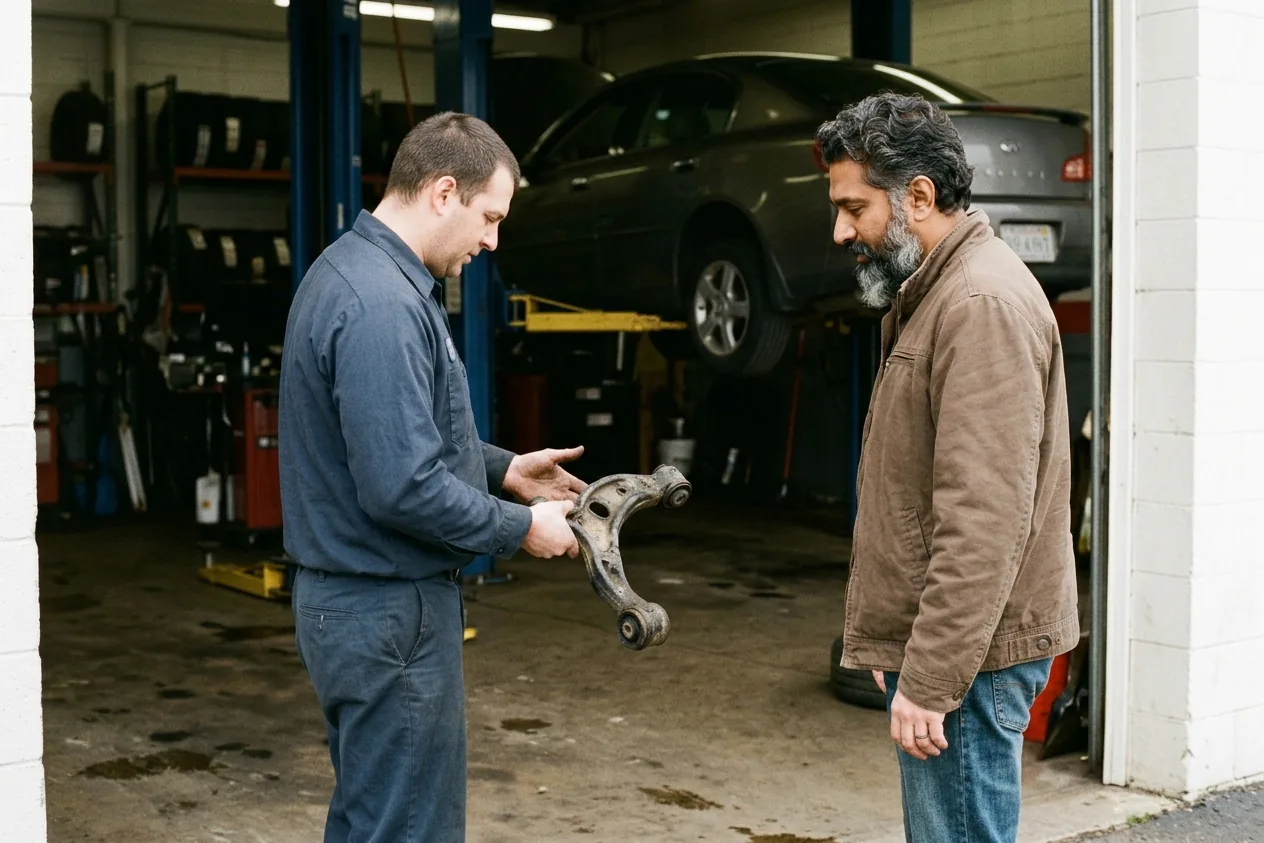
- Show the failed part.
- Show the unusual wear.
- Show the technician who found the problem.
- Explain why one repair matters and another one can wait.
- Show the customer whose car came in on a tow truck and drove away that afternoon.
- Show the diagnosis two other places missed.
Show the work.
Trust tends to follow respect. And respect is much easier to earn when people can see the evidence for themselves.
Your shop already produces this stuff every day.
This is the part most shops miss. You do not need to create an entire second operation called “content.” The content is already happening.
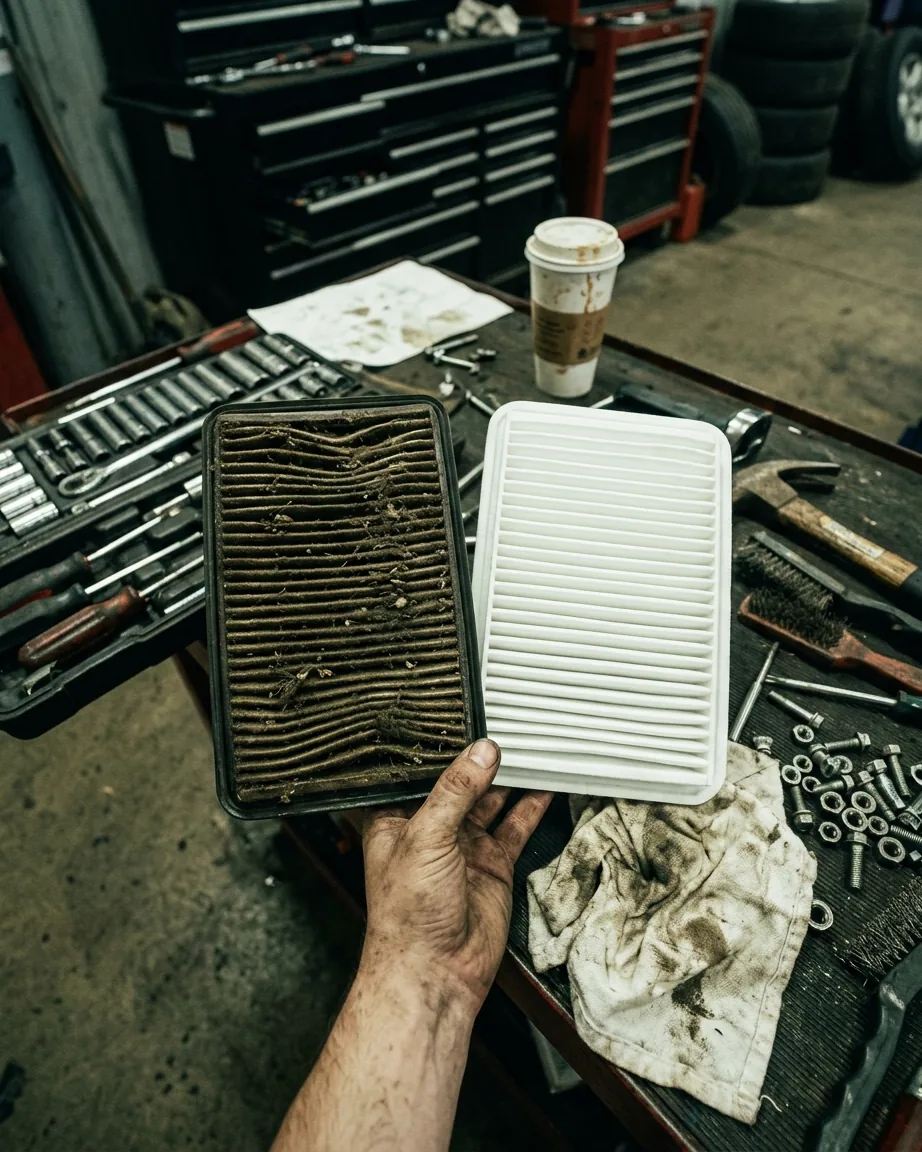
- A technician pulls an unbelievable filter out of a car.
- Someone catches a failing wheel bearing before it becomes dangerous.
- A customer brings in a car another shop couldn’t diagnose.
- A younger technician learns something from a senior technician.
- You buy a new piece of equipment.
- A difficult job finally comes together.
- A customer leaves a review saying your advisor explained the repair better than anyone ever had.
Somebody in the shop says:
“Look at this.”
That is usually the moment worth showing. And that is usually the moment that disappears.
The photo stays in somebody’s camera roll. The story gets told to two people at lunch. The customer knows what happened. The employees know what happened.
And everyone outside the building sees another stock photo about checking your tire pressure.
That is an enormous waste of reputation.
Your customers aren’t the only people looking.
There is another reason this matters. Good technicians research shops too.
Before someone applies, interviews or accepts an offer, they want to know what kind of place they’re walking into. What kind of work comes through the doors? Are the technicians good? Does the shop invest in equipment? Do people stay? Does the owner seem serious? Would I learn something there? Would I be proud to tell another mechanic I work here?
A feed of generic maintenance graphics says almost nothing. A feed showing real work, real technicians, difficult diagnoses, training and pride in the craft says a great deal.
Customers and technicians are looking for different things. But the underlying question is remarkably similar.
Is this a shop I respect?
That is a much bigger job for social media than filling a posting calendar.
The Performer has never had more tools.
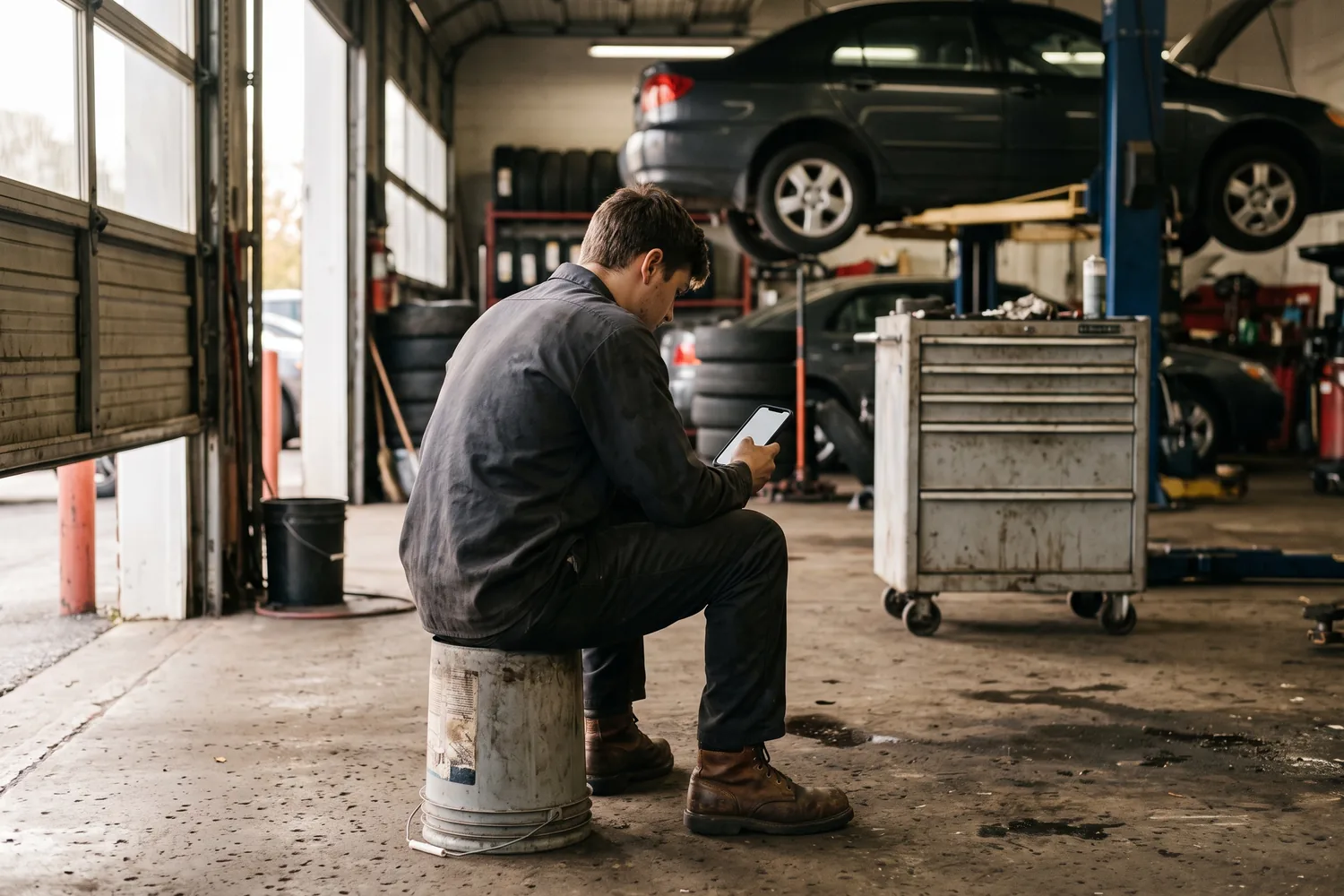
There is no shortage of ways to look active online. AI can tell you what to say. Templates can make you look polished. Schedulers can make sure you post three times a week. Agencies can produce a steady stream of tips, holiday graphics and promotions. Ads can put all of it in front of more people, and coupons can give somebody a reason to click.
Everything points outward: please choose us.
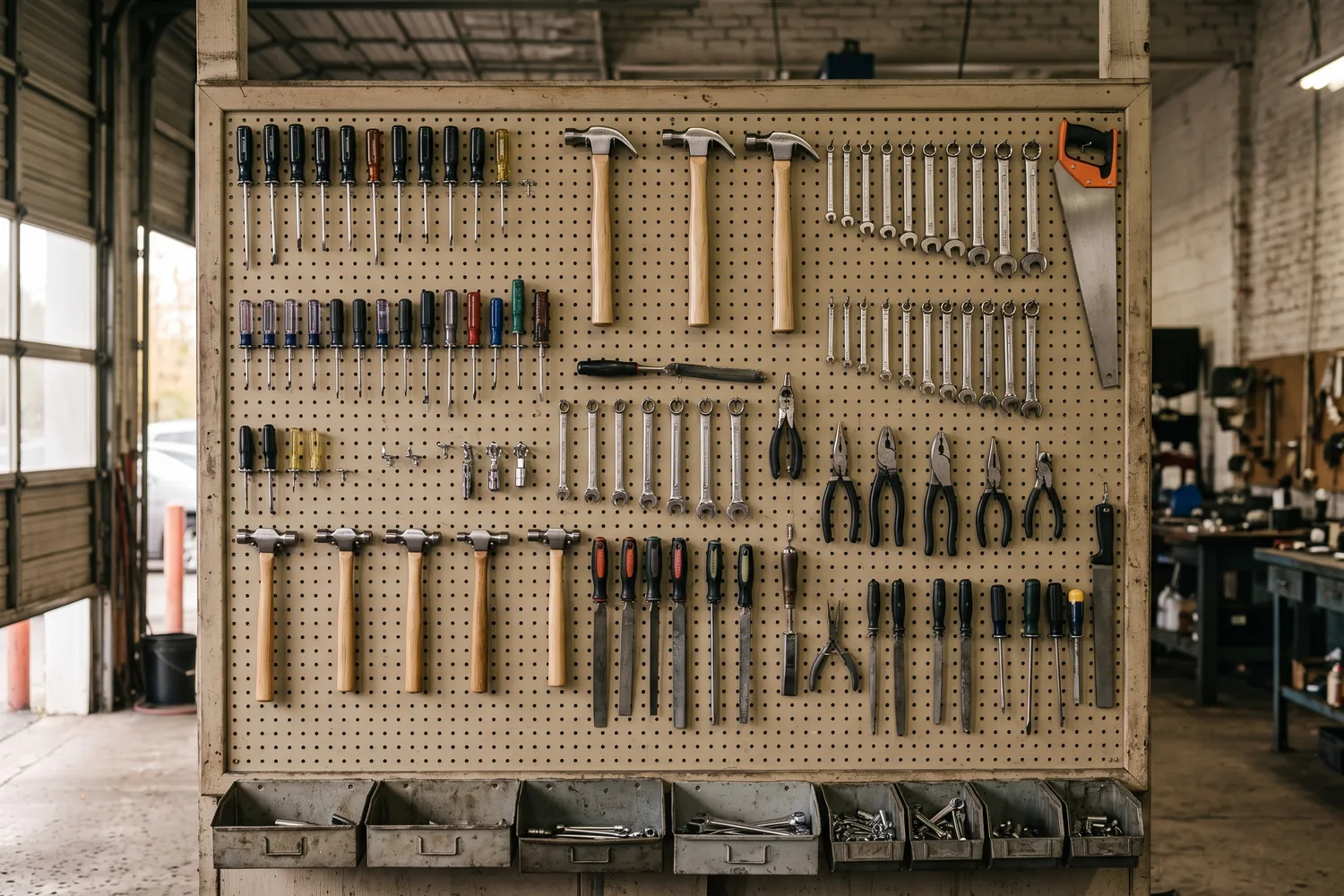
There is another kind of shop. It has gravity.
Customers recommend it. Employees are proud of it. Good technicians know its name. The owner doesn’t need to manufacture a personality, because the shop already has one, and its reputation came from years of doing the work correctly.
That shop doesn’t need to pretend to be interesting. It needs to stop hiding the interesting things that are already happening.
Social media should show the shop, not become the shop.
Most repair owners were never going to become content creators. And they shouldn’t. You already have repair orders, employees, customers, parts, comebacks, scheduling and a building full of cars demanding attention.
The answer to social media cannot be another complicated system that requires somebody in the shop to become its full-time operator. The job should be simpler than that.
- See something worth showing.
- Take the picture.
- Explain what happened.
- Get back to work.
The technology should handle the production around that moment, not ask you to manufacture a new one.
That is the idea behind PostShop.
PostShop doesn’t run your repair business. AutoLeap, Tekmetric, Shopmonkey, Mitchell and the other systems in your shop already have that job. They run the shop. PostShop shows the shop.
It takes the real work already happening around you and turns it into something customers can actually see. Not because you need more posts. Because the work deserves witnesses.
Start 5 days free$199/month, everything included · 5 days free before you’re charged · Cancel anytime
Attention can be manufactured. Respect has to be earned.
Your shop already earns it. Every diagnosis. Every customer you don’t oversell. Every technician who gets better. Every job done correctly when nobody outside the building was watching.
The opportunity is not to invent a more impressive version of the business for social media. It is to make the real one harder to miss.
Don’t perform expertise. Show it.
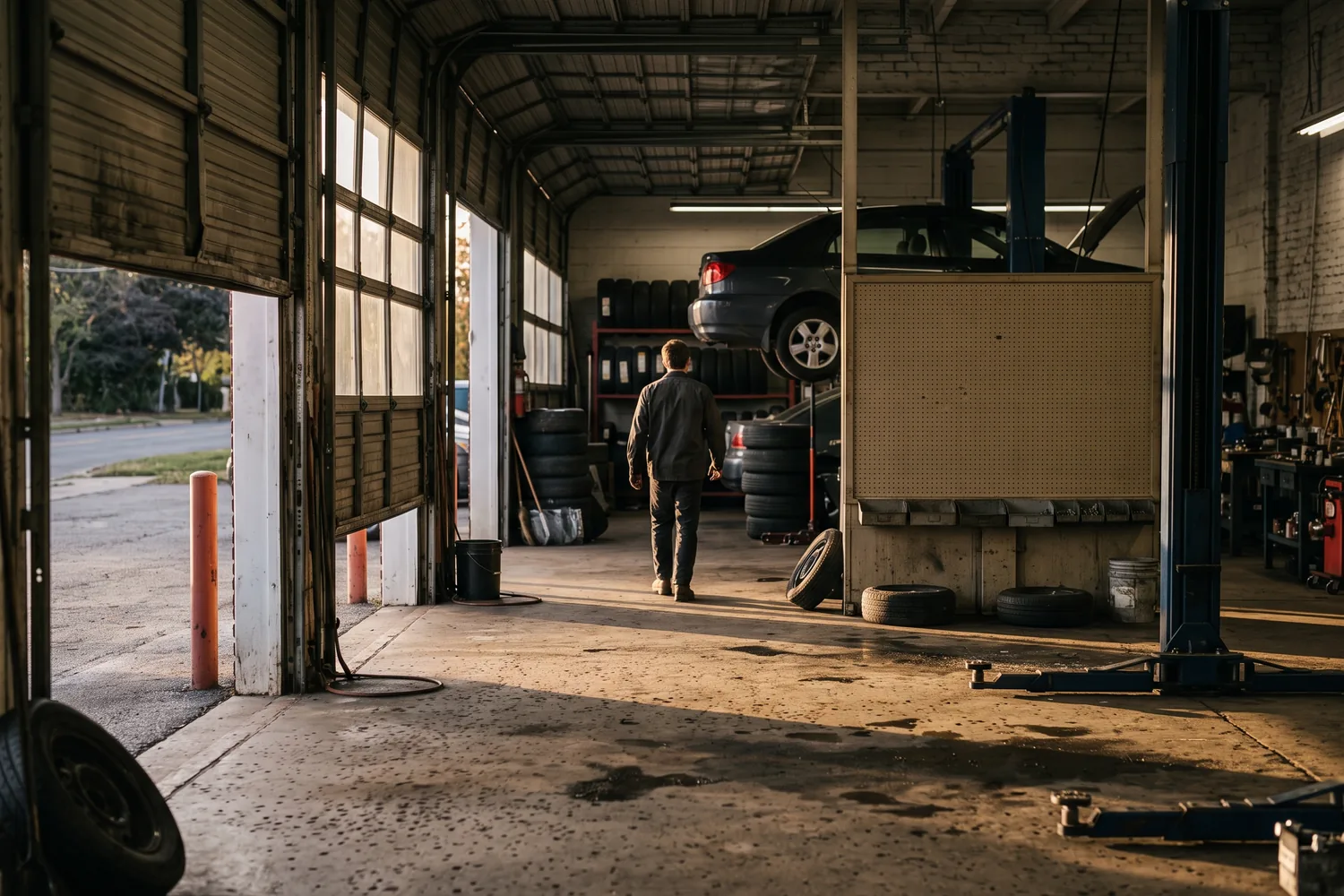
You have nothing to prove. Plenty to show.