Where PostShop fits · For writers with work in progress
Before your book is published, it still needs readers.
Agents, journals and contests say no to almost everyone. The people who already believe in you can say yes today.
You finished it. The draft that took two years, or the story that took two weekends to get right, or the poem you kept turning over until it held. And now it sits in a folder.
The usual roads out of that folder are narrow. Literary agents read hundreds of queries for every writer they take on. Jessica Faust of BookEnds Literary has written that over the years she has asked to see more of about 10 percent of the queries she receives, and that her offer rate is under 1 percent.1 Literary magazines are no wider: at good ones, acceptance runs about 1 percent or less.2 Self-publishing removes the gatekeeper and replaces it with a crowd. Bowker counted about 2.6 million self-published titles with ISBNs in the United States in 2023, beside about 563,000 from traditional publishers.3 That is close to 8,800 new titles a day, before a single reader has decided anything.
None of those numbers say your work isn’t good. They say the doors are crowded, and that waiting at them is a strange way to spend the years before your book exists.
The readers you already have
Here is the part the querying advice tends to skip. Before publication, the readers who matter most are not strangers. They are the people who already know you write: the friend who asks how the novel is going, your sister’s book club, the colleague who reads a mystery a week, your old workshop, the cousin who knows someone who knows an agent.
Those people are not a consolation prize. They are where reading decisions come from. In Nielsen’s 2021 survey of more than 40,000 people, recommendations from people they know were the most trusted source of all, at 88 percent.4 A 2025 survey of readers on Everand and Fable put “people I know personally” at the top of how they discover books, ahead of every recommendation engine.5
The trouble is that the people who support you have nothing to pass on. A Word file attached to an email is awkward to forward. “My friend wrote a novel, want to read it?” is a big ask with nothing to show. So the support stays private: kind, sincere, and stuck with the first few people who hear about it.
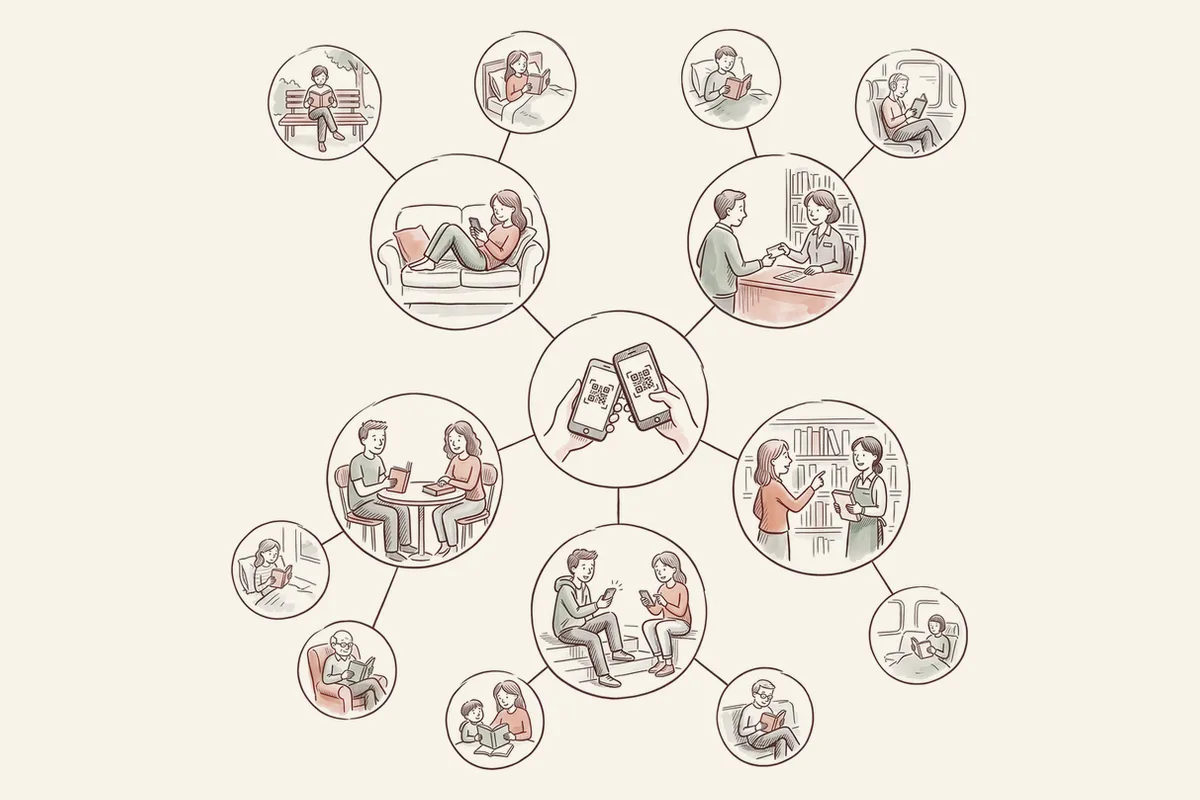
What early readers give a writer
Early readers are not reviewers. What they give you before publication is information you can’t get any other way:
- whether the opening holds a stranger past the first page;
- whether your one-sentence pitch makes someone want to read more;
- which kind of reader leans in: the mystery readers, the literary book club, the people who liked the last thing you wrote;
- who offers to read the whole thing, and who knows someone who should.
That is beta reading, market research and the start of a readership at once, and none of it needs a publisher or an ISBN. It needs a page worth forwarding.
A page of its own
That is what Relay Ready is for. It gives a book with no ISBN yet, or a single story, poem or essay, a page of its own: your one-sentence pitch, a few lines about the work and, if you want, a sample. A book’s sample can run up to 6,000 words. A single piece can show up to 30 percent of itself, so readers judge the writing itself, and readers who want the rest ask you through the page. When a journal publishes the piece, link it from your page and readers go there to read the whole thing.
You send the link to five people who’d want to read it, or print the QR code for a reading, a workshop or your writing group. Everyone who opens the page can text it on, copy the link or show the QR code to someone beside them. The page asks search engines not to list it, so the people reading it are the ones you, and the people who support you, chose to send it to.
Free, you get the page, the QR code, your own contact link so readers can reach you, and two totals: how many people opened the page, and how many opened it from someone else’s link. That second number is the one to watch. It counts the people who support you handing your work to people you have never met.
Paid Relay Ready, at $14.99 a month, adds the market research. Paige, PostShop’s AI helper, writes new versions of your pitch that change one thing at a time, and with your go-ahead half your new visitors see each. You learn which one makes more readers open the sample, get in touch or pass the page on, and the winner becomes your pitch. You see a map of where the page is being read and how many steps out from you it has travelled, and how many readers opened the sample and read it to the end. Readers can write to you through the page while your email address stays private. Your sample can be read aloud in a woman’s or a man’s voice you choose and approve first. And there is room for 30 books, stories, poems or essays.
A smaller ask
The hardest part of early readers is asking. Most writers would rather not impose. A page changes the size of the ask. You aren’t asking anyone to read 90,000 words. You’re asking them to look at one page and send it to one person they think would like it. People who care about you are glad to do that; it is a small, concrete way to help, and it is easy to say yes to.
But the asking is yours. No agent, press or algorithm makes the first sends for you, and three habits decide how far the page goes:
- Send it. Text the link to five people today, and five more next week.
- Follow up. A week later, ask each of them who they sent it to. Most people mean to pass a link on and then forget; a friendly reminder from you is usually the difference. Your dashboard’s count of people who opened it from someone else’s link shows you when the asking is working.
- Find the next place. The writing group this month, the neighbors’ book club next month, the friend who just moved across the country and joined a new one. Every new group is a new start.
That is all Relay Ready needs from you. It makes each step about as small as a step can be. The step is still yours.
Why bother? Honest answers
Start with a question only you can answer. Is anyone reading your work right now, beyond the two or three people you showed it to? If not, look at what you have done to put it in front of anyone. Here is the cold truth: a book’s reach, before publication and after, depends almost entirely on its writer. If you bring no energy or interest to it, don’t be surprised when it goes nowhere.
Don’t take our word for it. The numbers point the same way from every side:
- Publication doesn’t bring readers with it. Of the new print titles the largest publishers released in one recent year, about two-thirds sold fewer than 1,000 copies.6
- Publishers expect writers to carry it. Many now look for authors who are willing to help promote their own books,7 and testimony at the 2022 antitrust trial over Penguin Random House’s bid for Simon & Schuster showed that the largest trade publisher in the country spends about 2 percent of its revenue on marketing.8
- The writers who earn are the ones who do the work. In BookBub’s survey, more than 70 percent of authors grossing $10,000 or more a month spend six or more hours a week on marketing, against about 40 percent of everyone else.9
- Readers choose books from people they know. Recommendations from people they know are the most trusted source of all,4 and the top way readers discover books.5 The people who know you are reachable by exactly one person.
Why should I care about readers before I’m published? Because you spent years writing it, and, as the numbers above show, publication doesn’t bring readers with it. The writers who arrive at publication with people already waiting for the book start ahead, and publishers notice.
I’ll worry about it once I have an agent. The readers you gather now aren’t lost when you do. The same link opens the published book’s reader page later, so the friend who read your sample this year is one tap from reviewing the book on its launch day.
It sounds complicated. A working title, one sentence about the work, a few lines like the back of a book, and a sample if you want one. You don’t need a website, a social media account or a following. It’s free, with no card.
I don’t want to bother my friends. They already ask how the writing is going. A page is the easiest possible answer to that question, and passing it to one person is a small, concrete way for them to help. Most people who care about you would rather be asked than left out.
What if someone takes my work? The page asks search engines not to list it, and its address includes random letters, so nobody finds it by guessing. You choose what goes in the sample, or leave the sample out.
Why would I pay when the free page works? You don’t have to; the free page stays free. Pay when you want to know which pitch makes a stranger open your sample, before you send that pitch to agents who decide from a few lines.
Do the numbers even matter? Only if you act on them, and each one tells you what to do next. If nobody has opened the page from someone else’s link, your people aren’t passing it on: follow up. If readers open the sample and stop early, the opening is where to work. If one pitch beats the other, that line belongs in your query letter.
When it becomes a book
When the book gets an ISBN, nothing you shared is wasted. Add the published book to PostShop Relay and link the two, and your Relay Ready page opens the book’s reader page, where readers review it on Amazon, Goodreads and Barnes & Noble and ask their library and bookstores to carry it. Every link and QR code you handed out keeps working. The friend who read your sample two years ago lands on the page where the book can be reviewed, requested and bought.
The road to publication is long and the doors are narrow. The people who already believe in you are right there, and you can put something in their hands today.
Relay Ready is free for one book, story, poem or essay, with no card. Paid Relay Ready is $14.99 a month or $149.90 a year, and is included in paid PostShop Relay ($29 a month) and PostShop Complete ($99 a month).
References
- Jessica Faust, BookEnds Literary — “Query Breakdown from Good to Great,” November 2021: a request rate averaging about 10% over the years, and an offer rate under 1%.
- Electric Literature — Lincoln Michel, “Lit Mag Submissions 101”: acceptance rates at good magazines are about 1% or less.
- Publishers Weekly — Bowker ISBN counts for 2023: 563,019 traditionally published titles and 2,637,565 self-published titles.
- Nielsen — 2021 Trust in Advertising Study, more than 40,000 respondents: recommendations from people they know, 88%.
- Publishers Weekly — Everand and Fable’s 2025 reading report, from a survey of more than 1,600 U.S. adults: “people I know personally” ranks as the top source of book discovery.
- Jane Friedman — Kristen McLean of Circana BookScan on 45,571 frontlist print titles from the largest publishers over 52 weeks: 0.4% sold 100,000 copies or more; 51.4% sold 12 to 999 and 14.7% fewer than 12.
- IBPA Independent — “Collective Engagement: Authors and Publishers Marketing Together,” March/April 2019: publishers expect authors to help market their books, and some look for authors willing to.
- Publishers Lunch — The Trial: The DOJ’s Suit to Block Penguin Random House’s Acquisition of Simon & Schuster, 2022: the largest trade publisher spends about 2% of revenue on marketing.
- BookBub Partners — “What Does a Writer Do?” author survey: more than 70% of authors grossing $10,000 or more a month spend six or more hours a week on marketing; about 40% of authors earning less do.
Figures are cited as published by their sources. Where a source has updated its numbers since, the source is authoritative and this page is not.